










Skiing in Davos
Davos ski area shares about 300km of ski slopes with Klosters, separated into six main areas plus a further two specialist beginners areas on the edge of the city. The two largest areas, Parsenn and Jakobshorn, have everything most skiers need, but Pischa, Madrisa and Schatzalp-Strela add further variety.
Davos Klosters Ski Area Overview
Davos and Klosters lie in a valley with skiing on both sides in six separate areas.
Parsenn
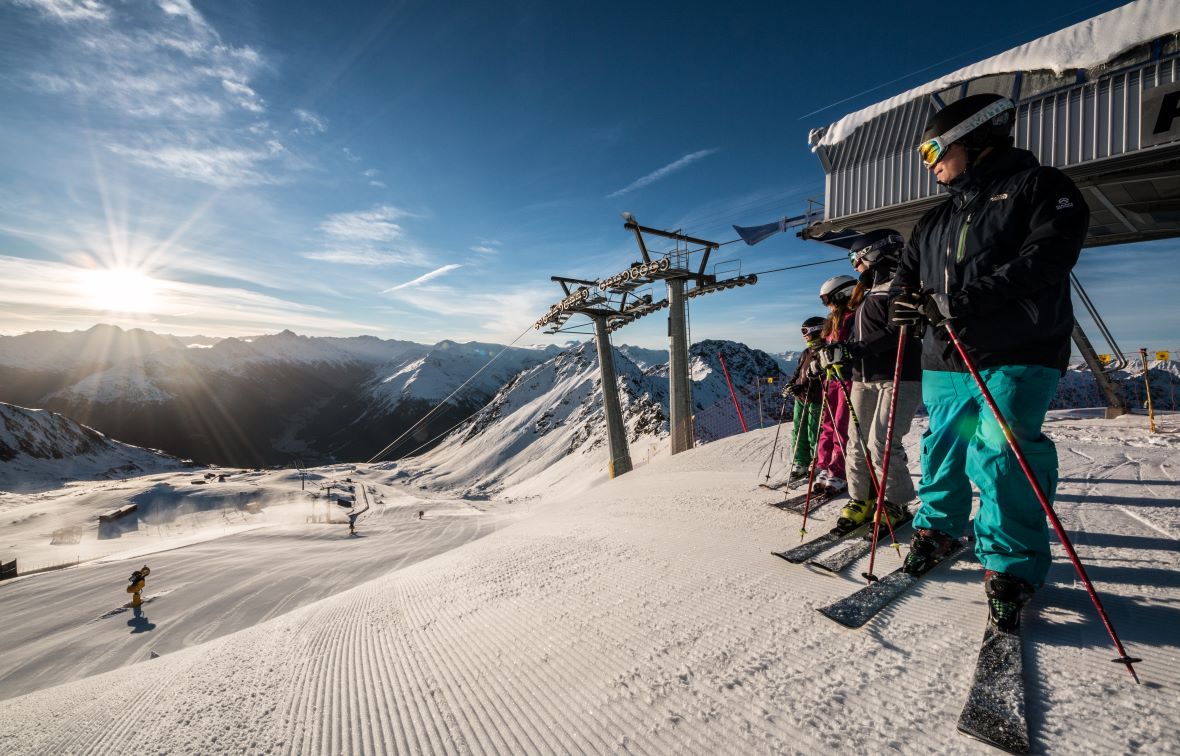
Parsenn Ski Area (c) Davos Klosters Mountains
Parsenn is the largest ski area in Davos Klosters and stretches all the way from Davos to Klosters, via Gotschnagrat. The Parsennbahn funicular in Davos Dorf connects to a further train or a chairlift to get you up to the major lift junction of Weissfluhjoch. Above it is Weissfluhgipfel at 2,844m, the highest point in the Davos Klosters ski area. From here it’s a vertical descent of about 1,300m back to Davos, or about 1,600m back to Klosters, or over 2,000m to Küblis.
Jakobshorn

The Jakobshorn ski area includes the Vertikal black run (c) Martin Bissig
Two consecutive cable cars whisk you from Davos Platz to the 2,590m summit of the Jakobshorn (see the photo on the top of the page). Jakobshorn attracts snowboarders and freestyle skiers because of the Jatz snowpark, but for those who want to take it easy, there’s also gentle blue run skiing and high-quality mountain restaurants with sunny terraces like the Fuxägufer. And for those who want to be tested without getting airborne, there are black pistes, ski routes and two freeride zones.
Rinerhorn
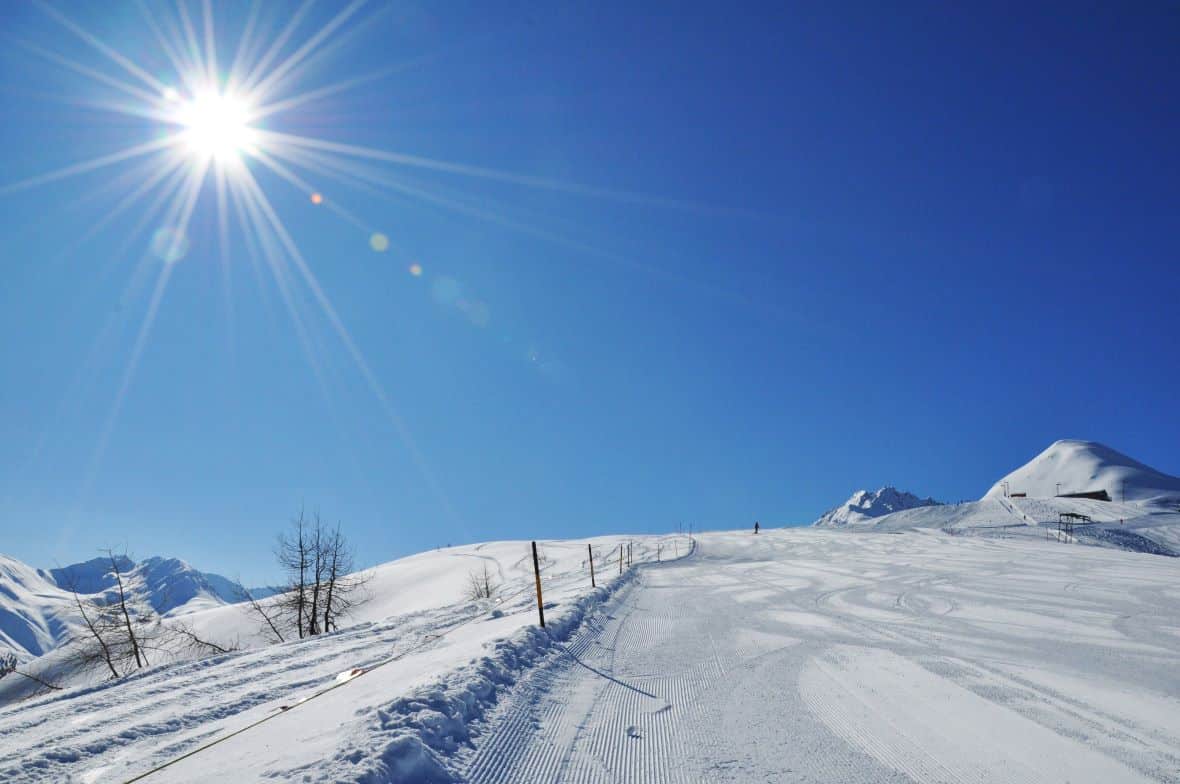
Uncrowded skiing on Rinerhorn (c) Rinerhorn-DKM
The Rinerhorn ski area is at the most southerly extent of the Davos region and is reached by car (free parking), bus or train to Glaris. It has blue, red and black pistes, some descending through trees, so it can be a good option in bad weather. Often mid-week, Rinerhorn is deserted during the day, but it’s floodlit tobogganing in the evening is deservedly popular.
Pischa
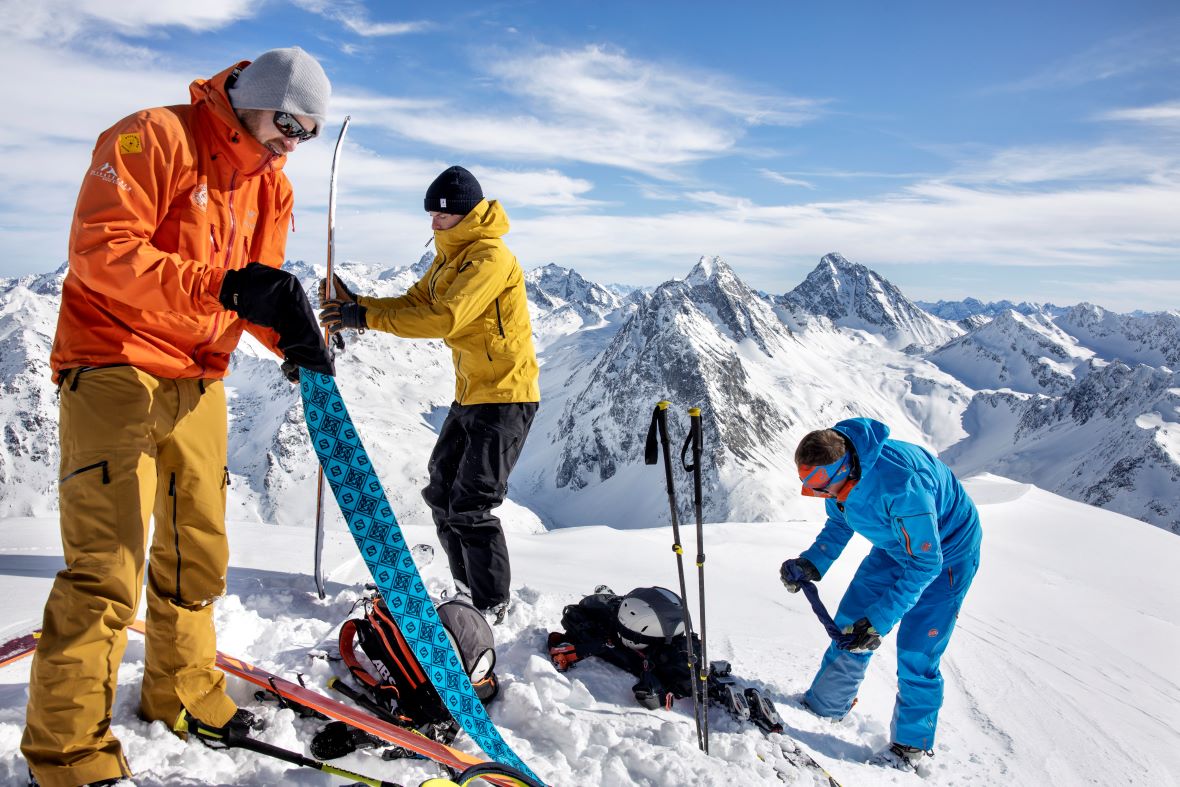
Ski Tourers on Pischa (c) NIcoScharer_Destination Davos Klosters
Davos’ fourth ski area, Pischa, is a 10-minute drive or bus-ride up the Flüelatal valley from Davos Dorf. There are no pistes, just a single ski route, some snowshoe trails and winter-hiking paths, and plenty of off-piste terrain for freeriders and ski tourers with a mountain guide. It faces south, so it’s usually best in the morning.
Schatzalp-Strela
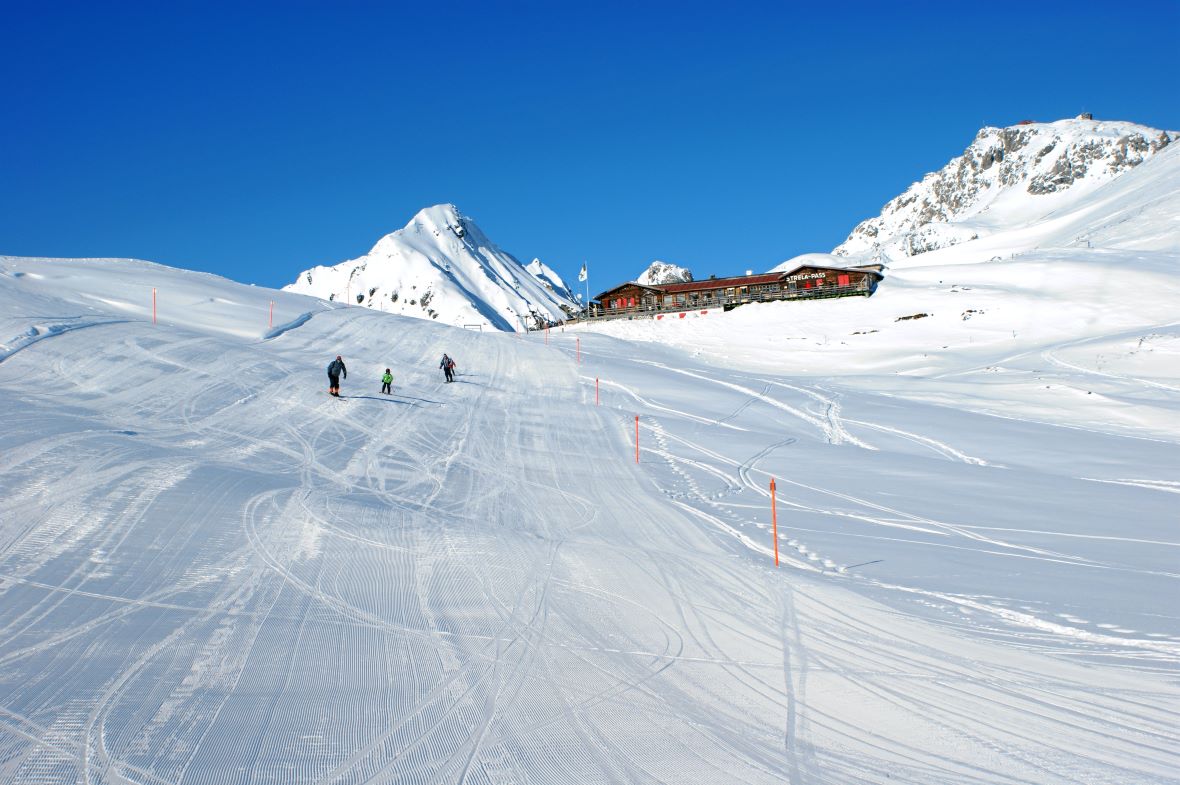
Schatzalp-Strela combines nostalgia with lovely views (c) Schatzalp
Schatzalp-Strela is privately owned and not covered by the regional Davos Klosters lift pass, despite it being just above Davos. It’s billed as the ‘chilled’ ski sector but it’s steeped in nostalgia, with its vintage cog railway, famous Belle Epoque hotel, and a small ski area, with just handful of red and blue pistes that don’t use any artificial snowmaking and share a mountainside with walking paths and a toboggan run.
Madrisa
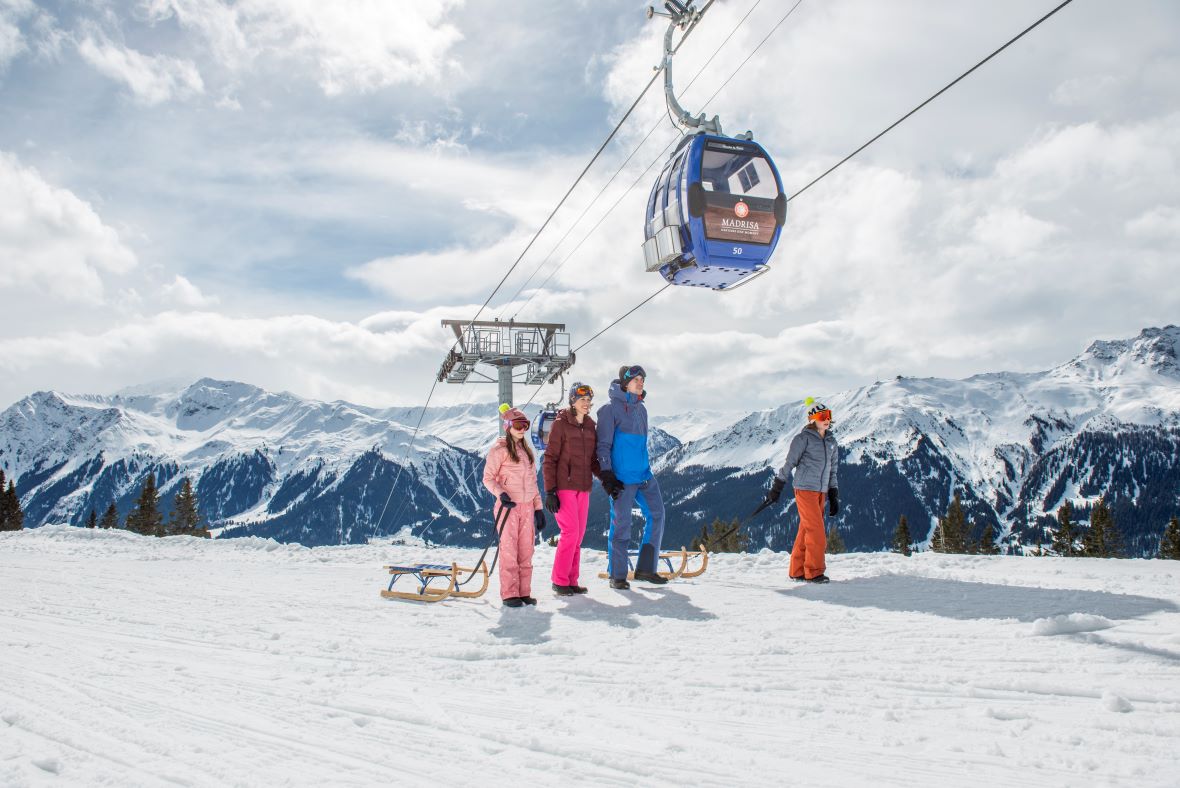
The sunny child-friendly Madrisa sector above Klosters has fine tobogganing as well as skiing. (c) ChristianEgelmair_Destination DavosKlosters
Madrisa is a family ski area on the far side of Klosters from Davos. It’s reached by taking a picturesque gondola ride from Klosters Dorf to a sunny plateau at Albeina-Saaseralp. Here there are children’s play areas, magic carpet lifts, an exceptionally long toboggan slope to Sass, and special adjustable chairlifts for children and skiers with disabilities. But Madrisa is not just for children, as it has blue, red and black runs, plus an ungroomed ski route; and good skiers in good conditions can ski from the sector highpoint (2,602m) all the way down to Klosters Dorf nearly 1500m below, on a mix of red and black runs.
Beginner Skiing in Davos-Klosters
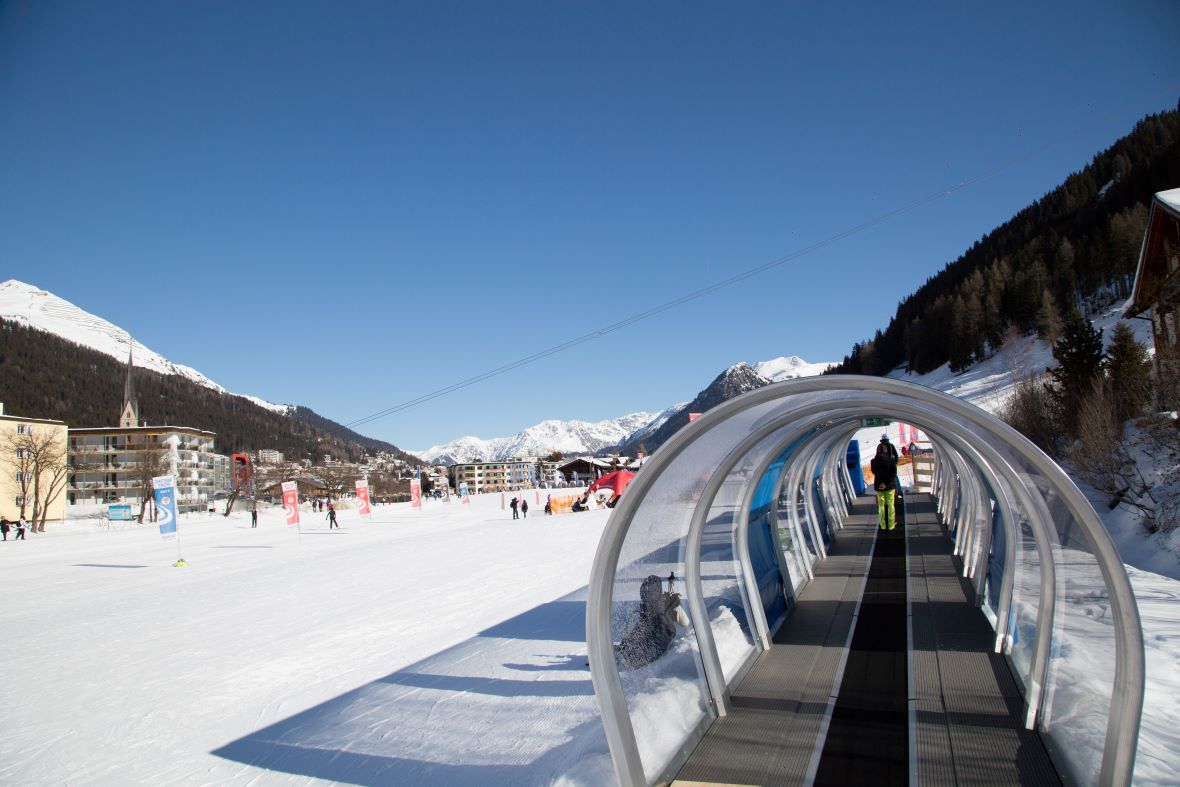
Nursery Slopes at Bolgen (c) DDO_Destination Davos Klosters
Davos has two beginner areas: Bolgen at the foot of Jakobshorn in Davos Platz; and Bünda in Davos Dorf. There are are also good gentle blue runs on both Jackobshorn and Parsenn. And beginners wanting a change of scene, or to mix ski lessons with long toboggan rides, can also visit the Rinerhorn, Schatzalp-Strela and Madrisa sectors too.
There are two small areas for beginners close to the city: Bolgen, at the base of the Jakobshorn (where it is claimed the world’s first drag lift was built in 1934) in Davos Platz; and Bünda, in Davos Dorf, which is on the opposite side of the valley and a slightly inconvenient 10-minute hike from the Parsennbahn lift station. When you’re ready to move off the nursery slopes, the obvious next stage are the easy blue runs near Davos on Parsenn and Jakobshorn, but if you want more variety there are gentle uncrowded slopes at Rinerhorn and Schatzalp-Strela where you can mix learning to ski with toboggan rides.
Madrisa has sunny nursery slopes and an even longer toboggan slope, but it takes a lot more time to reach from Davos, so is probably only suitable for children who will enjoy the train ride there and back.
Ski Schools & Ski Lessons in Davos-Klosters
Are you looking for private or group ski lessons? CheckYeti works with leading ski schools and ski instructors in over 500 ski destinations throughout Austria, France, Germany, Italy and Switzerland. Let them help you choose the right ski school or instructor for you. Qualified and experienced ski instructors and guides at 500+ ski destinations, 6,000+ offers and 24,000+ ski school reviews. View ski schools, classes, offers and discounts, and pre-book your ski lessons online.
Book Ski School Lessons in Davos Klosters Online >
Intermediate Skiing in Davos Klosters
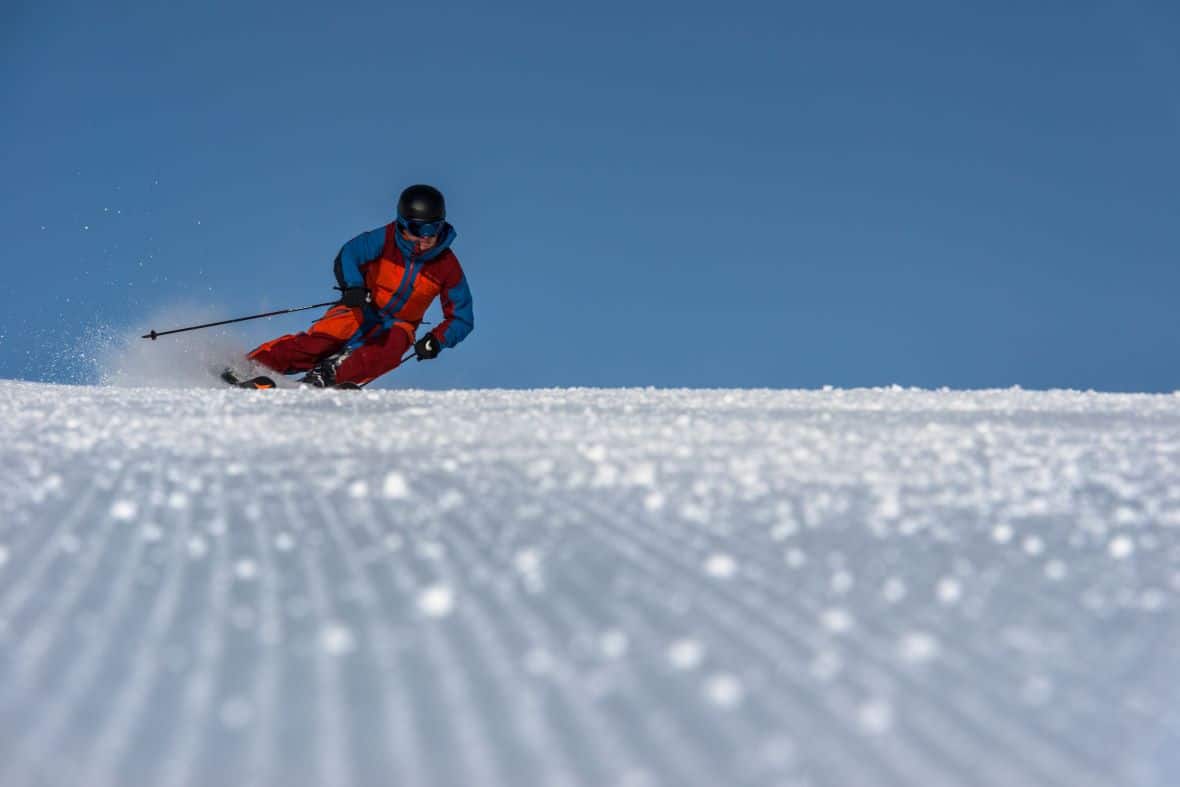
Davos has lots of wide, perfectly groomed, red and blue pistes (c) EgelmairPhotography_Destination Davos Klosters
To get the best out of Davos, intermediate skiers have to get used to travelling to and from the slopes on buses and trains. This extra effort is rewarded by lots of uncrowded, intermediate-friendly red and blue runs in the Parsenn, Jakobshorn, Rinerhorn, Schatzalp-Strela and Madrisa ski areas, including some very long descents.
The Davos Klosters ski area offers many wide, undulating, confidence-boosting, red and blue runs, some of which are very long.
On Parsenn, you can ski all the way from Weissfluhjoch to Klosters, nearly 1,500m below, entirely on red pistes; on Jakobshorn you can ski from Jatzhorn to Davos Platz about 1,000m below entirely on blue pistes; whilst on Rinerhorn, you can choose whether to make the 1,000m top-to-bottom descent on blue runs, or on red runs, or on a mixture of reds and blues. Confident intermediates in good snow conditions will also be able to manage the even longer descent to Küblis (covered in the Advanced Section below) if they skip out the optional steep start: the final section is on an ungroomed ski route but it’s not steep.
Except for weekends and peak holiday periods, the Davos Klosters slopes are usually much less crowded that those in major Austrian and French resorts. And even on busy days when the resort does fill-up, intermediate-skiers can usually find uncrowded red and blue pistes at Rinerhorn and Schatzalp-Strela.
The disadvantage of Davos Klosters for intermediate skiers is that the ski area is fragmented. Unless you want to spend all your time on Parsenn, you can’t just step out of your door and go skiing, knowing there are endless slopes in front of you. Instead, you have to think about where you are going, and how to get there and back. And you have to accept that some of your ski day will be spent on buses and trains, commuting to and from a ski area, or getting from one area to another.
The positive side of this segmentation is the variety of terrain you will encounter in the different ski areas. For instance, you can ‘follow the sun’, switching between east-facing Parsenn in the morning and west-facing Jakobshorn in the afternoon. In warm weather, you can head to the highest slopes on Parsenn, whilst in in cold weather, Madrisa’s south facing slopes have more warmth and sunshine. And in poor visibility there are treelined slope at both the Gotschnagrat-end of Parsenn and at Rinerhorn.
And whilst the buses and train can be frustrating, they are at least free to any skier with a valid lift pass or a guest card.
Advanced & Expert Skiing in Davos Klosters
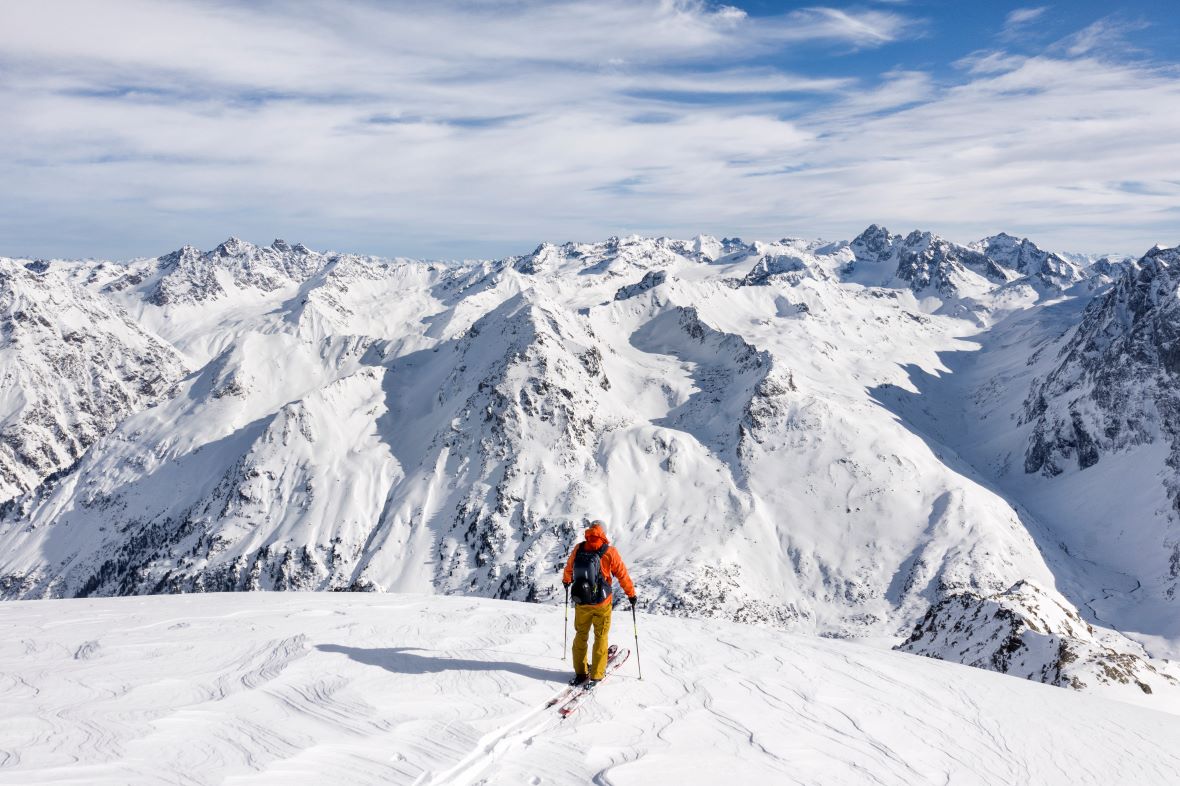
Freeride skiing on Pischa (c) NIcoScharer_Destination-Davos-Klosters
In addition to great off-piste for which you definitely need a mountain guide, Davos has black pistes, ski routes and freeride zones. The lift company tries to keep the ski routes and freeride zones free from avalanches, but unlike the groomed pistes, you ski them at your own risk and are responsible for your own safety.
Davos Klosters has black runs that are long and beautiful as well as challenging. These include the black pistes that lead down to Wolfgang at the end of Davos Lake, via the Meierhofer Tälli and the Gruobenalp. The Schlappintobel black run on Madrisa, and the long wide black run that descends from Nüllisch Grat on Rinerhorn through woods and fields down to the base station, also test your endurance as well as your technique and both have lovely views.
At the very top of the ski area, the black runs on Weissfluhgipfel at Parsenn and on Jakobshorn have relatively short challenging sections, but they are still worth visiting,, if only because they usually have the best snow and wonderful scenery. The black runs at the bottom of these ski areas, which take you all the way back to the town, have more variable snow conditions which can add to the challenge of skiing them, but they usually remain skiable throughout the season. They too have steep sections but are not continuously steep.
Weissfluhgipfel is also the starting point for the long decent down to the village of Küblis which is partly on an ungroomed ski route. This is 12 km long with a vertical elevation of over 2,000m. The first part is a short but steep black run (either Gipfel Nord or Gipfel Est) which can be skipped out by less confident skiers. Next are two red pistes (17 followed by 24) to Schiffer, followed by a long ski route (56). This is not steep: the enjoyment comes from the scenery and the changing terrain. Open runs transform into narrow tracks through pine forests, with Schwendi huts in clearings and on into meadows and past farm buildings. When you finally reach Küblis, the café on the railway platform has indicators allowing you enough time to finish and pay for your meal before catching the train back to Klosters. The variant heading to Serneus is similar.
Jakobshorn has two broad freeride zones on the upper slopes, and a long ski route (reached via a traverse) that takes you a long way from the pistes, as does the ski route on Madrisa, reached from the top lift.
The major freeride centre, however, is at Pischa, where there is both an official ungroomed ski route and a lot more terrain that can be explored with a guide.
Mountain guides can also show you further off-piste descents on Parsenn, Jakobshorn and Madrisa.
Boarding & Freestyle in Davos Klosters

Freestyle skiing in Jatz Park on Jakobshorn (c) DDO-Destination Davos Klosters
Davos has always been a favourite ski resort for snowboarders, and its appeal has grown as its T-Bar lifts have slowly been replaced, although a few remain. The Jatz snowpark on Jakobshorn has a good variety of jumps and half-pipes for most standards.
Davos was one of the first ski resorts to encourage snowboarding and you still see more boarders on the slopes than in other ski resorts. Jakobshorn, which is home to the Jatz snowpark and has good freeride zones as well, is particularly popular. There is also a family park on Parsenn.
Mountain Restaurants in Davos Klosters
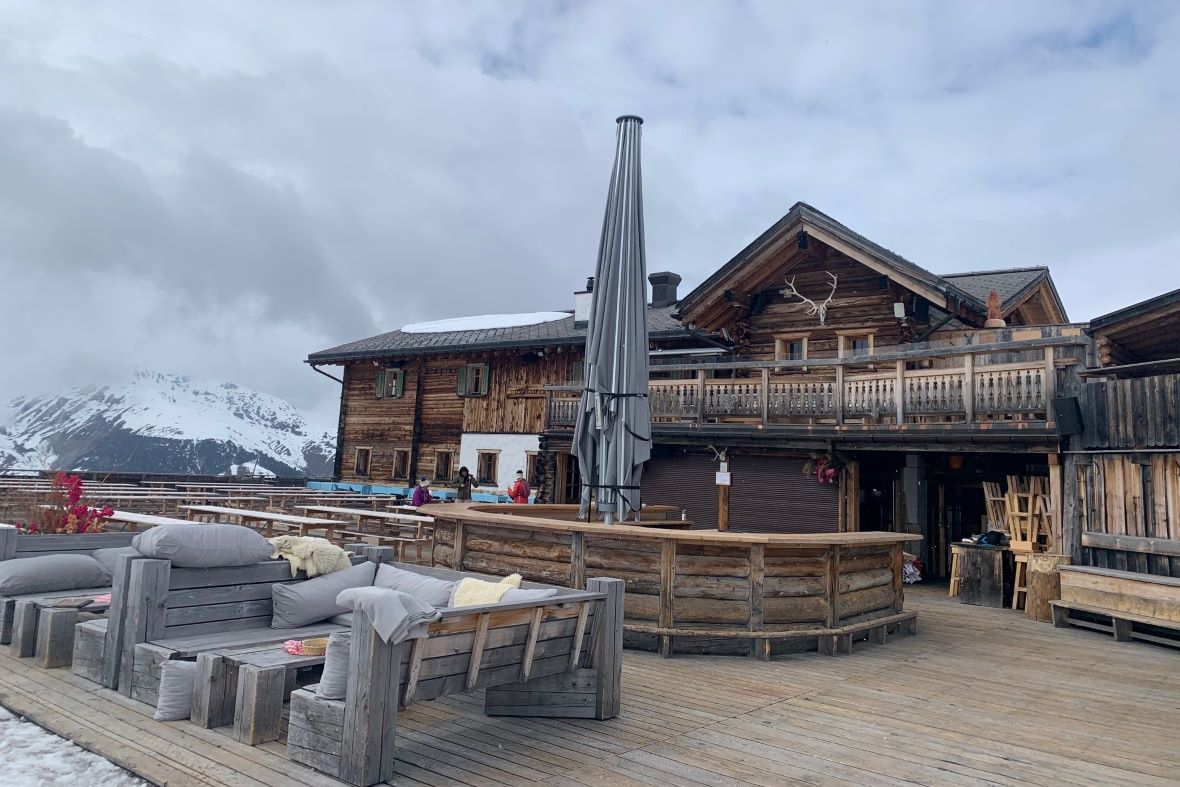
Fuxägufer Restaurant on Jakobshorn
The Davos-Klosters ski area has good variety of mountain restaurants, from self-service cafes and relaxed bars to fine dining with table service. Small ‘Schwendi’ huts on the way down to Klosters add rustic charm.
Full listings are available in the mountain restaurants section of the Davos Klosters tourist board website, but among the best mountain restaurants are:
At the Gotschnagrat/Klosters end of the Parsenn ski area, and close to the Schifer lift bottom station, this restaurant/bar/hotel, is in a sheltered spot surrounded by woods. It has a fabulous outdoor terrace and a crossover cuisine, mixing local specialities with international dishes.
Restaurant Fuxägufer is located at 2200m above sea level in a sunny, scenic at the top of the Fuxägufer ski lift spot near the centre of the Jakobshorn ski area. The deckchairs and tables on the outside terrace bar quickly fill up on sunny days, whilst the inside restaurant offers serious cooking, with local dishes to the fore, and excellent fondues.
Bergrestaurant Weissfluhgipfel
Bergrestaurant Weissfluhgipfel is at the very top of Parsenn ski area, and it’s rather utilitarian looks disguise a high class restaurant with wonderful salads, traditional and gourmet dishes and mouth-watering deserts – and, of course, fantastic views. Although it’s expensive, it gets booked up quickly on busy days.
Located outside the village of Schlappin on the valley run back to Klosters from the Madrisa ski area, this traditional mountain lodge provides welcome shelter, refreshment and nourishing food on a cold winter’s day. comforting food.
Near the bottom of the small Güggelbahn lift on the Jakobshorn sector, Chalet Güggel offers serious gastronomic meals, and a popular sun terrace bar with outdoor tables and deckchairs.