









What Makes A Ski Resort Good For Advanced Skiers?
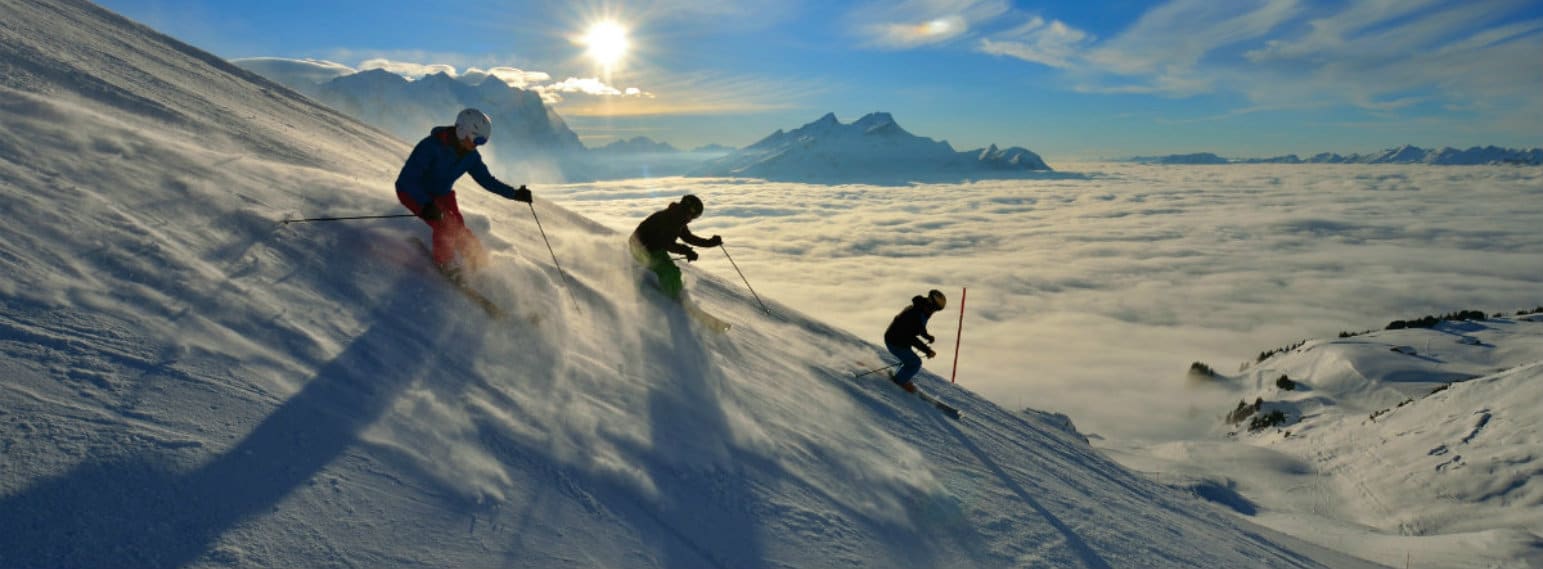
Advanced skiers demand vertical drop, technical complexity, and serious off-piste potential. The best expert resorts combine a high percentage of black runs with access to ungroomed terrain, couloirs, and glacier skiing. Peak altitude is a good indicator with ski resorts reaching 3,000m typically offering the most challenging and varied expert terrain. Also, ideally, slopes with a north-facing aspect that preserve powder long after a snowfall.
Advanced & Expert Ski Resorts
Advanced and expert skiers are not easily satisfied, but easily let down by resorts with only a handful of token black runs, off-piste terrain that’s been skied out by 9am, and a summit with little more challenging than a longish red run down to the base station. A week on the wrong mountain for advanced and expert skiers is a genuinely frustrating experience.
Ski resorts that genuinely challenge and reward advanced and expert skiers typically offer a combination of high altitude, high vertical elevation, a high percentage of quality black runs, lift-accessible off-piste terrain, a northerly aspect for snow quality, and good mountain guiding.
What To Look For In An Advanced Ski Resort
Altitude & Vertical Elevation
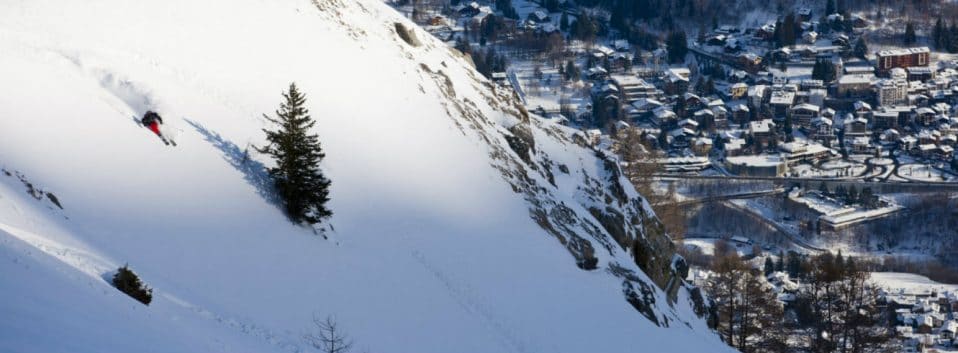
Vertical drop is the single most important statistic for advanced and expert skiers. A ski area with 2,000m or more of vertical drop delivers leg-burning, technically demanding descents from high altitude, including couloirs and mogul fields that deliver some of the best days on snow. Resorts with impressive summit elevations but high base altitudes often disappoint; what matters is the skiable vertical drop from top to bottom.
Aspect & Orientation
Slopes with north-facing aspects preserve powder significantly longer after a snowfall. The difference between skiing fresh tracks at midday and in the morning largely depends on aspect, and a ski area with predominantly south-facing slopes will see powder conditions deteriorate within hours of a storm. We specifically look at the orientation of the best terrain when rating resorts for advanced and expert skiers, mindful that not all ski resorts that market themselves as powder destinations quite live up to expectations.
Accessible Off-Piste Terrain
Lift accessible off-piste terrain at high altitude, as well as easily accessible off-piste between the pistes, is what separates truly great expert ski resorts from those that are merely challenging on the pistes. We look for resorts with established off-piste routes that are open more often than not, and a local culture that takes backcountry skiing seriously, including qualified mountain guiding, avalanche equipment rental and avalanche safety training where needed.
Mountain Guiding
Ungroomed terrain outside marked pistes carries genuine avalanche risk, even on seemingly benign slopes in apparently stable conditions. We strongly recommend hiring a qualified mountain guide for off-piste skiing regardless of your ability level. The best ski resorts make this straightforward, with reputable mountain guiding companies operating daily from the resort centre, and the lift company providing daily avalanche safety bulletins. Also, a qualified mountain guide will ensure you have the right equipment and know how to use it, and guide you to the best snow and terrain. First-class guiding and off-piste instruction make the best ski resorts for advanced and expert skiers, better than the rest.
Glacier Access
Glacier access adds a dimension of terrain unavailable at lower altitudes — vast, open snowfields, technical seracs, and year-round skiing that extends the season well beyond the standard December to April window. For expert skiers who travel specifically for snow quality, glacier access is a significant differentiator. Ski resorts such as Aletsch Arena, Engelberg, and Zermatt in Switzerland; Chamonix and Tignes in France; and Hintertux and Stubai in Austria all have glaciers, but not all glacier terrain is challenging, and size is not everything. Switzerland’s Aletsch Glacier (the largest glacier in the Alps) is a magnificent tourist attraction but is not accessible to most skiers. In contrast, Engelberg’s glacier terrain includes easy groomed pistes as well as challenging off-piste for experts and extreme skiers.
Advanced & Expert Ski Resorts: Europe v North America
Advanced & Expert Skiing in Europe
The sheer scale and variety of the high Alpine terrain in Europe offers an abundance of excellent opportunities for advanced and expert skiers, including world-renowned ski resorts such as Chamonix, Val d’Isere, St Anton am Arlberg, Verbier, Zermatt and Monterosa (Champoluc/Gressoney). Also, lesser-known resorts such as La Grave (for experts only) and St Martin-de-Belleville in France, as well as Andermatt and Engelberg in Switzerland. All have built solid reputations over decades on the quality of their expert terrain. Chamonix in particular occupies a category of its own, with the Vallée Blanche glacier descent and access to some of the most technically demanding terrain in the world. European ski resorts also benefit from a deeply embedded guiding culture. Finding an IFMGA-certified mountain guide is straightforward in any major Alpine resort.
Advanced & Expert Skiing in North America
Advanced and expert skiing in North America offers a fundamentally different experience, defined by snow quality rather than by ski area extent and vertical drop. Famous powder resorts, such as Alta, Snowbird, and Powder Mountain in Utah, receive average annual snowfalls exceeding 500 inches of light, dry powder that European resorts cannot match. Jackson Hole in Wyoming combines exceptional snow quality with serious vertical drop and one of the most challenging lift-accessed terrain profiles in North America. Whistler Blackcomb in British Columbia combines European-scale size with Pacific storm snowfall to deliver the most complete expert-skier experience in North America.