









What Makes A Ski Resort Charming?
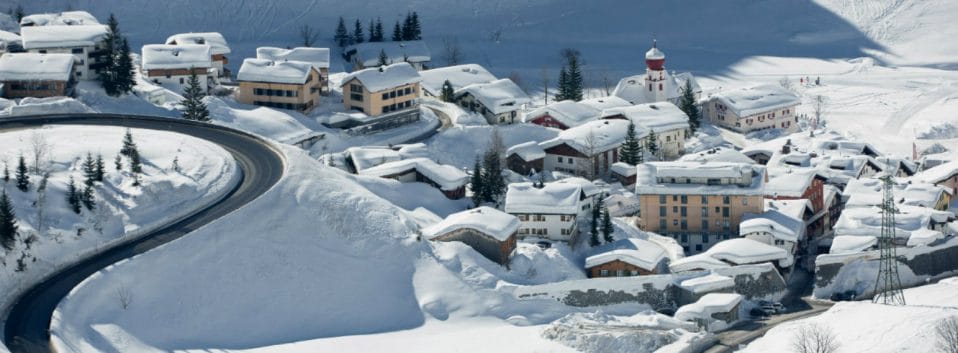
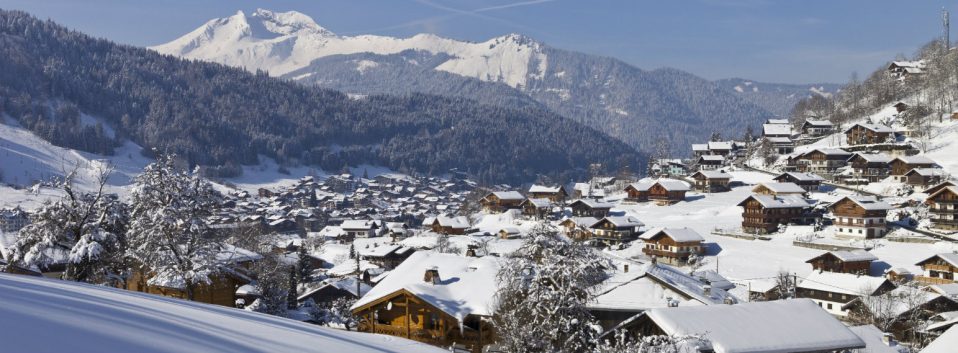
The most charming ski resorts are defined by authentic mountain character rather than purpose-built infrastructure. Traditional timber chalets, ancient stone churches, car-free village centres, and a genuine local culture separate these destinations from the concrete blocks of the 1960s and 70s. The best villages have preserved their history while adding world-class ski infrastructure, and offer a fairy-tale winter atmosphere alongside serious skiing.
Charming Ski Resorts
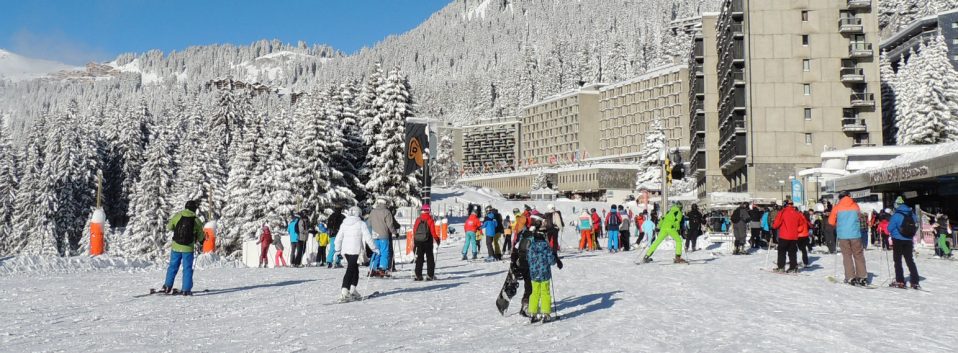
Charm is the hardest thing to manufacture in a ski resort, and the easiest to destroy. The concrete tower blocks that went up across the Alps in the 1960s and 1970s are testament to what happens when convenience is prioritised over character and charm. Functional, efficient, and utterly soulless, the purpose-built resorts of that era gave skiing a bad name with anyone who cared about where they were as much as what they were doing there.
The best ski resorts for charm and character usually existed long before skiing arrived; mountain communities with centuries of history, well-preserved traditional architecture, and a genuine local culture that survived the ski tourism boom without sacrificing what made them special.
We’ve rated ski resorts on the authenticity and quality of the village experience, the preservation of traditional architecture, and that harder-to-define charm and character that makes you want to stay longer than you planned.
What To Look For In A Charming Ski Resort
History & Architecture
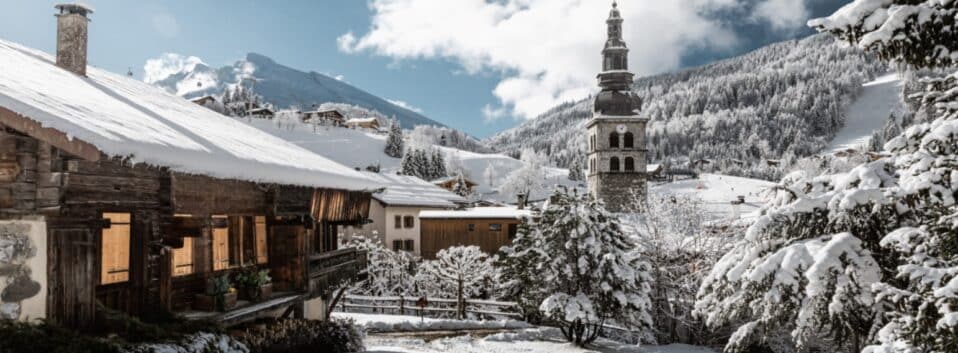
Authentic architecture is the starting point and the hardest thing to fake. The most charming ski resorts are those where the buildings pre-date the ski tourism era. Traditional timber chalets with overhanging roofs, ancient stone churches, wooden barns converted into restaurants, and a streetscape that has evolved organically over centuries rather than being designed by a resort developer. The difference between genuine alpine architecture and modern pastiche is immediately apparent.
Car-free Village Centres
Car-free or low-traffic village centres dramatically improve both the atmosphere and the practicality of a ski holiday. Walking through a pretty snow-covered pedestrian village centre on a winter evening, where the only sounds are the crunch of boots on snow, surrounded by the warm glow emanating from characterful shops and inviting bars and restaurants, is one of the defining experiences of a great ski holiday.
Conservation
Ski resorts that have committed to strict conservation and building regulations which preserve the resort’s historic character and charm have created an environment that is qualitatively different from those which neglect conservation or have nothing worth preserving.
All-Year-Around Communities
A genuine all-year-around community is one of the clearest signals of authentic charm. Resorts that function in summer as well as winter, with local family businesses and residents whose livelihoods aren’t entirely dependent on ski tourism, usually have more character, legendary bars and restaurants, and a more welcoming atmosphere than those that exist purely as seasonal ski destinations. The most charming ski resorts feel inhabited as well as characterful, rather than functional and well-serviced.
Ambience & Experiences
The quality and variety of bars, restaurants, independent shops, and cultural attractions matter more in a charm-focused resort than in a purely skiing destination. When the village experience is as important as the mountain, the off-slope options need to be genuinely good, not just functional. We look for resorts with a high density of quality independent restaurants and bars, as well as retail and cultural experiences that are genuinely charming and feel authentic.
Charm, Luxury & Affordability
Charm and luxury are related but distinct qualities, and many of the most charming ski resorts combine both. A ski resort can be charming without being expensive, and many of the most beautiful ski resort villages are genuinely affordable. Ski resorts can also be luxurious without being charming purpose-built high-altitude resorts with world-class hotels and restaurants, but no soul.
Often, the highest-rated resorts tend to be those where traditional character and high-end hospitality coexist, where the architecture and atmosphere are authentic and historic as well as impressive, and where restaurants and hotels are exceptional. While most charming and historic ski resorts typically feature high-end luxury hotels and restaurants, they typically offer a wide range of hospitality to suit most, if not all, budgets.
Charming Ski Resorts: Europe v North America
Charming Ski Resorts in Europe
European charm has centuries of head start. The traditional villages and towns in the Austrian, French, Italian and Swiss Alps developed their character over hundreds of years before skiing arrived. The best of them have managed to add world-class ski infrastructure without compromising the qualities that make them special.
Some of the best-known examples in the Alps are Alpbach, Kitzbühel, and Lech in Austria; Avoriaz, La Clusaz, Megève, and Morzine in France; Canazei (Val di Fassa), Cortina d’Ampezzo, Courmayeur, and Gressoney-la-Trinité (Monte Rosa) in Italy; and Gstaad, Saas-Fee, Wengen, Mürren, and Zermatt in Switzerland. Less well-known or less obvious, perhaps, are Bettmeralp (Aletsch Arena) and Grimentz (Val d’Anniviers) in Switzerland, and the richly historic city of Innsbruck in Austria, which offers easy access to multiple ski areas and pretty villages.
Charming Ski Resorts in North America
North American ski resorts have developed a different but genuine sense of place over a much shorter period. The Victorian mining town architecture of Telluride, the frontier character of Jackson’s town square, the historic mining towns of Aspen and Park City, and the purpose-built but carefully executed village of Whistler all offer an authenticity that is distinctly North American rather than a pale imitation of European alpine style. The most charming North American ski resorts embrace what they are rather than trying to replicate something they’re not, and the result is a genuinely appealing alternative to the European model.